How Latency Budgets Shape the Model and Architecture You Should Choose
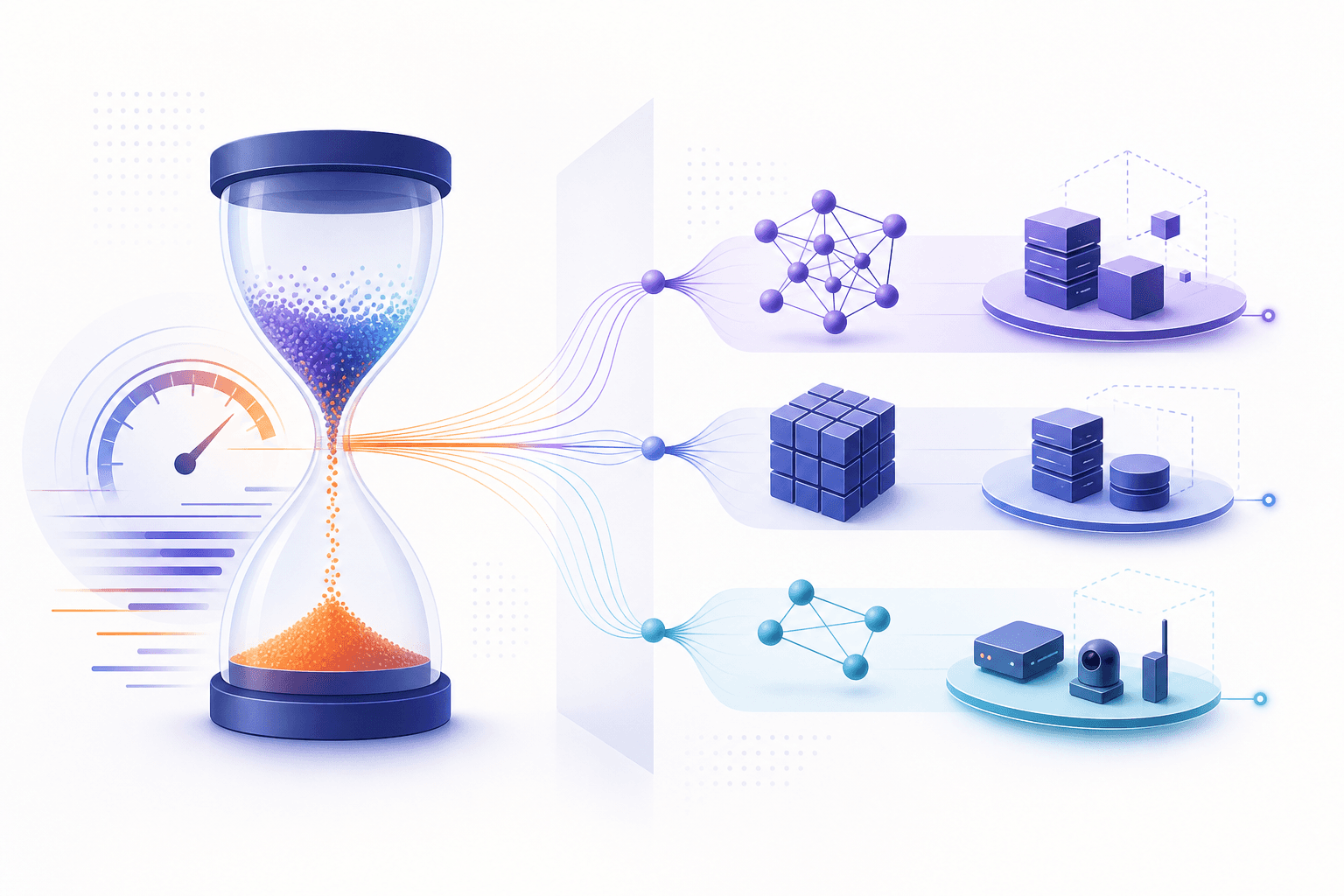
In the world of AI engineering, latency isn't just a performance metric—it's a fundamental constraint that can shape every decision we make, from model selection to system architecture. The challenge lies in balancing latency with the model's complexity to meet user expectations and system requirements.
Understanding the Latency Landscape
Latency refers to the time it takes for a system to respond to input. In practical terms, it's the difference between an application that's a delight to use and one that's frustratingly slow. For AI applications, especially in fields like real-time analytics or customer service, latency can make or break the user experience.
When we assess latency budgets, we're considering how quickly a system must react to be functional for its intended purpose. For applications like clinical decision support or point-of-sale systems, this could mean sub-second response times. This constraint heavily influences the choice of both the AI model and the underlying architecture.
Model Complexity vs. Response Time
One of the first decisions impacted by latency is model complexity. More complex models, which may offer higher accuracy, often require longer processing times. Thus, if the latency budget is tight, we might opt for a simpler model that won't compromise the user experience.
Take, for instance, our ScribeDesk solution, where clinical documentation must be processed quickly and accurately. A leaner, well-optimized model can improve latency, ensuring that healthcare professionals aren't left waiting, impacting their workflow.
Architectural Considerations
Selecting the right architecture is crucial when working within a latency budget. Distributed systems allow for parallel processing, reducing the time needed to compute complex tasks. However, they also introduce their own latency considerations—network delays, data serialization, and deserialization times can quickly add up.
A strategic combination of edge and cloud computing can also aid in managing latency effectively. Edge computing brings computation closer to the data source, cutting down on transmission times and enabling faster responses for real-time applications.
Our custom AI solutions frequently employ this hybrid model to help clients meet their latency needs without sacrificing performance or accuracy.
Conclusion: Balancing Trade-offs
Ultimately, dealing with latency is about finding the right balance between model performance and system responsiveness. It requires continuous iteration and testing to ensure that the chosen architecture supports both the latency budgets and the application's functional requirements.
If you're struggling with defining latency parameters for your AI solution, or need guidance on selecting the right model and architecture, we're here to help. Connect with us to discuss your specific goals and explore how we can tailor solutions to meet your needs effectively.