Designing Customer-Support Automation That Knows When to Escalate
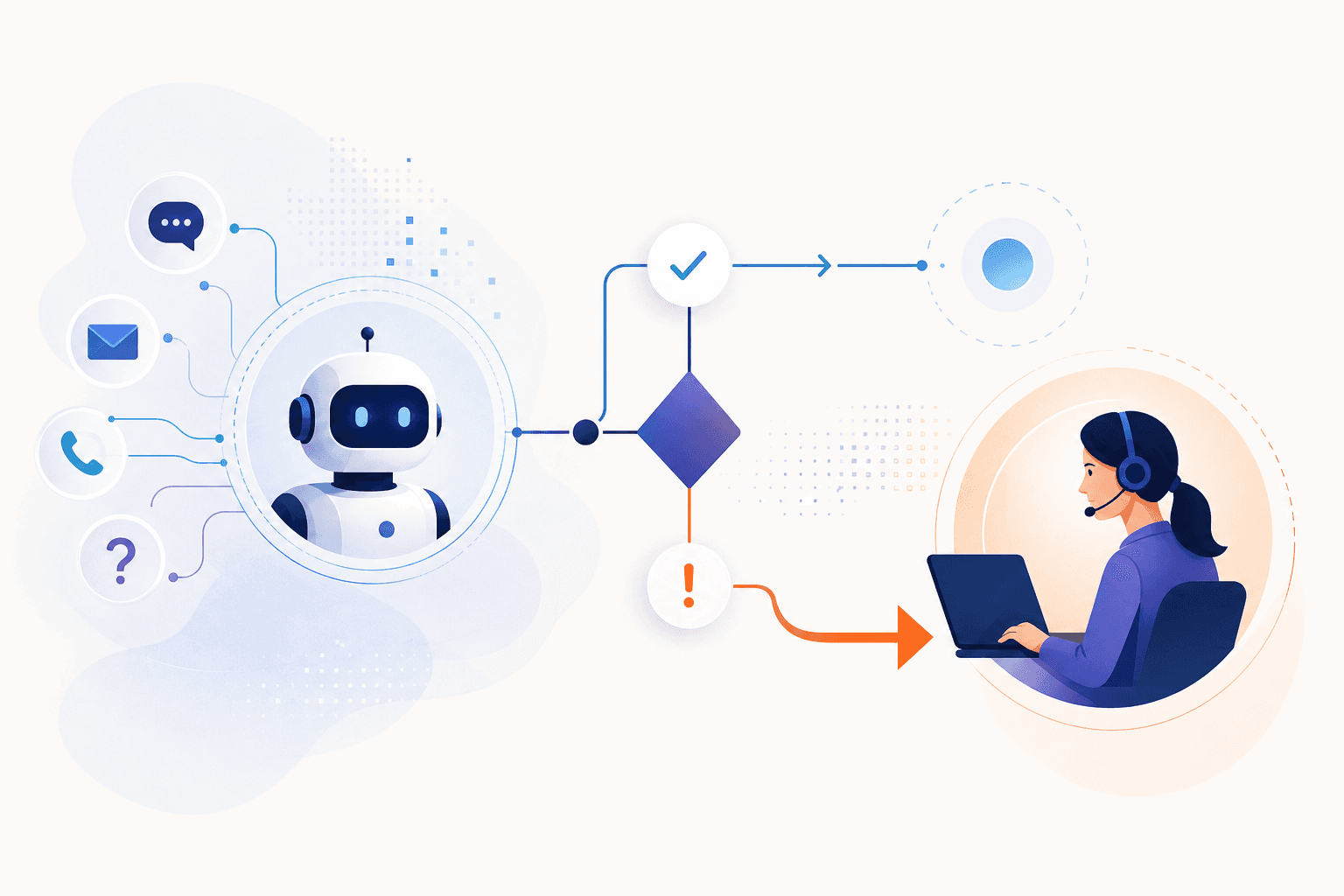
In a world where customers expect fast and effective support, automation can be both a boon and a challenge. While AI-powered systems handle many routine inquiries efficiently, the true test lies in knowing when to hand over an interaction to a human agent. This balance is crucial for maintaining customer satisfaction and trust in AI support systems.
Understanding the Role of Escalation
Escalation isn't just about passing a problem along. It's about ensuring that complex issues are resolved quickly while maintaining a seamless customer experience. We design our customer-support automation with a key focus on recognizing the limits of AI. This means building systems that are capable not only of understanding context and complexity but also of sensing frustration or dissatisfaction from the customer.
Our approach integrates natural language processing to gauge nuances in customer interactions. Recognizing when an inquiry exceeds the capabilities of automated systems is more than just identifying keywords. It's about context and emotional tone—a task AI can assist with, but not master alone. Hence, incorporating human judgment at the right moment becomes essential.
Building Decision Frameworks
Creating an effective escalation strategy starts with a robust decision framework. We focus on criteria that can indicate when an AI has reached its limits. These may include repeated customer attempts to clarify an issue, specific subject matter tags that denote complex problems, or thresholds for negative feedback.
A key component is feedback loops. By analyzing past escalations, our systems learn what triggers an escalation and refine future interactions. This not only improves AI decision-making over time but also helps in training human agents to better anticipate when they'll need to step in, allowing them to prepare more effectively.
Seamless Integration and Handoff
It's not enough to merely identify when to escalate; how the transition happens is equally crucial. When a customer-support interaction transitions from AI to a human agent, it must be seamless. We ensure all prior interactions are logged and transferred efficiently so customers won't have to repeat themselves. This integrates our AI systems as an extension of human support, rather than as a separate entity.
By designing with empathy at the core, our aim is to maximize the strengths of both AI and human capabilities. Human agents are empowered to handle the nuanced, complex cases AI cannot resolve alone, thus elevating the overall customer experience.
Achieving this synergy requires ongoing adjustments and real-world testing. But when done correctly, it enhances both efficiency and customer satisfaction, ensuring that the human touch remains integral to digital support services.
For assistance in implementing or refining your customer-support automation strategy, let's discuss how we can help. Together, we can design systems that know not only how to solve problems, but when to seek help.